
A Five-Step Guide

If you're thinking about therapy, you may already feel stretched thin. Between work, caregiving and everyone else's needs, researching therapists can feel like one more job on the list. Many also wonder whether what they're dealing with is serious enough for therapy.
You don't need to be in crisis to look for support. If something has been weighing on you, that's reason enough. The five steps below will help you find someone who is qualified, affordable and a good fit for you.
We wrote this with women in mind, including trans women, Two-Spirit and nonbinary people. If you're a partner, parent, son, brother or friend helping someone you love find support, or a man or young person looking for a therapist yourself, you are welcome here too and can also use this guide.
Step 1: Make sure they're regulated
In Ontario, psychotherapy is a controlled act, and only members of six regulatory colleges can legally provide it. Words like "therapist", "counsellor" and "life coach" aren't protected, so anyone can use them. Look for one of these:
Registered Psychotherapist (RP), regulated by the College of Registered Psychotherapists of Ontario
Registered Social Worker (RSW), regulated by the Ontario College of Social Workers and Social Service Workers
Psychologist or Psychological Associate (C.Psych. or C.Psych.Assoc.), regulated by the College of Psychologists and Behaviour Analysts of Ontario
A physician, nurse or occupational therapist with psychotherapy training
No single profession is best for talk therapy. If you'd like a diagnosis or an assessment, for example for ADHD or autism, a psychologist or physician can help, and psychiatrists can also prescribe medication.
Step 2: Check their credentials
Search the therapist's name on their college's free public register. It takes about two minutes and shows whether they're currently registered, along with any restrictions or discipline history. If you're seeing someone online, check that they're registered in Ontario.
Step 3: Sort out cost and coverage
OHIP doesn't cover therapy with psychotherapists, social workers or psychologists in private practice, but free and lower-cost options exist. Your main options are:
Workplace or private benefits. Check which professionals your plan covers, since some don't include Registered Psychotherapists.
Ontario Structured Psychotherapy (OSP). This is free, short-term cognitive behavioural therapy (CBT) for adults with depression or anxiety-related concerns, and you can refer yourself.
Employee and Family Assistance Programs (EFAP). These offer a few free sessions through your employer or your partner's employer.
Community agencies, sliding-scale fees and training clinics. Call 2-1-1 or visit 211ontario.ca to find options near you.
Since June 20, 2024, psychotherapy from registered psychotherapists has been exempt from GST/HST. Therapy costs may also count toward the medical expense tax credit, so keep your receipts.
Step 4: Look with experience with what you’re facing
General experience is a good start, but specific training in your concerns can make a real difference. Women often look for experience with:
pregnancy, postpartum and fertility, for every kind of family
trauma and gender-based violence
anxiety, depression and burnout
relationships, family and life transitions, including couples and family therapy
neurodivergence, with a neuroaffirming therapist who adapts sessions to how you think, communicate and take in information
Who you are matters too. It's okay to look for a therapist who shares or respects your culture, language, faith, sexual orientation, gender identity or neurotype, and who uses the names and pronouns you share. You shouldn't have to spend your sessions educating your therapist.
Step 5: Book a consultation and trust your sense of fit
Many therapists offer a short free consultation by phone or video. Try two or three before you decide, and ask about their experience, approach, fees and how they handle confidentiality. If it would help, ask how they adapt sessions, such as with written notes, movement breaks or camera-off virtual sessions.
After a few sessions, ask yourself whether you feel heard, respected and safe. If you don't, it's okay to say so or to look for someone new. Finding the right person sometimes takes more than one try, and changing therapists is a reasonable thing to do.
Get the FREE e-book
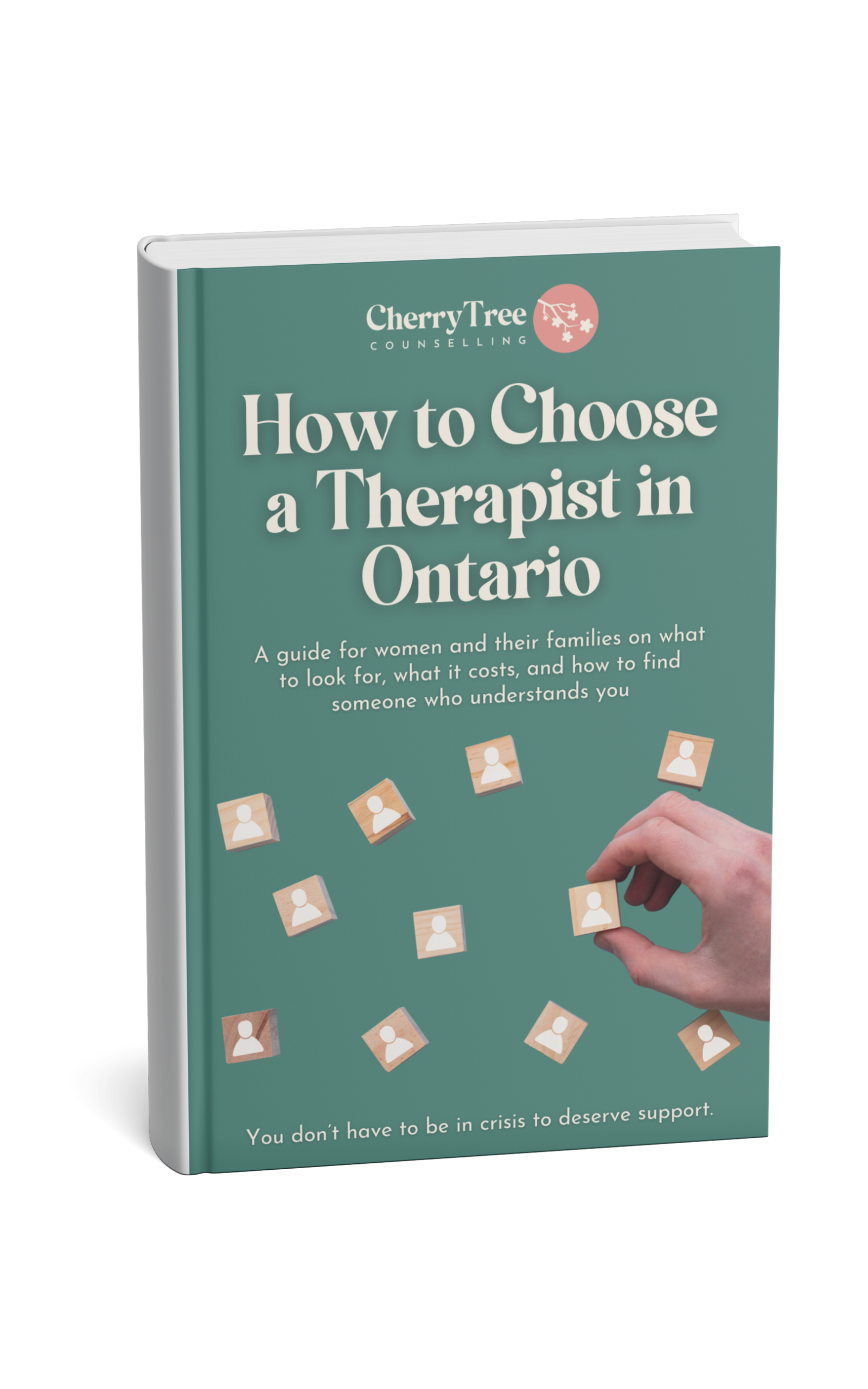
Our free e-book, How to Choose a Therapist in Ontario, goes deeper into every step. Inside, you'll find:
questions to ask in a consultation
what to expect in your first session
signs of a good fit, and red flags to watch for
four printable worksheets to track your priorities, your shortlist and your first sessions
Frequently Asked Questions
-
Mostly no. OHIP covers psychotherapy from a medical doctor, and some therapy is free through hospitals, community programs and the Ontario Structured Psychotherapy program. Therapy with psychotherapists, social workers and psychologists in private practice is usually paid through benefits or out of pocket.
-
Both can provide psychotherapy. Psychologists can also diagnose mental health conditions and do psychological assessments. Registered Psychotherapists focus on psychotherapy and are regulated by CRPO.
-
Search their name on their regulatory college's public register, such as CRPO for Registered Psychotherapists or OCSWSSW for social workers. In Ontario, the official term is "registered" rather than "licensed".
-
Not for a Registered Psychotherapist, social worker or psychologist in private practice. Some benefit plans ask for a doctor's note, and psychiatrists usually require a referral.
-
Many therapists offer couples or family sessions, and some will invite a family member into an individual session if you'd like. Ask about it during your consultation.
If you’d like to talk with us
We hope this helps you find someone who fits, wherever that turns out to be. If you'd like to see whether Cherry Tree might be a good fit, you can book a free meet-and-greet with one of our therapists, or contact our care team at (289) 309-1390 or admin@cherrytreecounselling.ca.

If you need support right now
These free, confidential services are available across Ontario. If you're in immediate danger, call 9-1-1.
9-8-8 Suicide Crisis Helpline: call or text 9-8-8, 24/7
Assaulted Women's Helpline: 1-866-863-0511, or #SAFE (#7233) on most mobile phones, 24/7
Talk4Healing, for Indigenous women: call or text 1-855-554-4325, 24/7
Hope for Wellness Help Line, for First Nations, Inuit and Métis Peoples: 1-855-242-3310, 24/7
211 Ontario: call 2-1-1 to find community and mental health services
This article is for general information and isn't a substitute for professional advice.
